Buy reinraumreinigung.eu ?
We are moving the project
reinraumreinigung.eu .
Are you interested in purchasing the domain
reinraumreinigung.eu ?
domain@kv-gmbh.de · 0541-91531010
Buy reinraumreinigung.eu ?
'Will + participle 2?'
"Will + participle 2" is a construction used to form the future perfect tense in English. It is used to indicate an action that will be completed before a specific point in the future. This construction is formed by using the auxiliary verb "will" followed by the past participle of the main verb. For example, "By the time you arrive, I will have finished my homework." **
What are the Latin forms of the present participle, perfect passive participle, and future active participle?
The Latin present participle is formed by adding -ns, -ntis to the present stem of the verb. For example, the present participle of the verb "amo" (I love) is "amans, amantis" (loving). The perfect passive participle is formed by adding -us, -a, -um to the verb stem. For example, the perfect passive participle of the verb "amo" is "amatus, amata, amatum" (loved). The future active participle is formed by adding -urus, -ura, -urum to the verb stem. For example, the future active participle of the verb "amo" is "amaturus, amatura, amaturum" (about to love). **


Similar search terms for Participle
Top-Angebote
Products related to Participle:
-
Inspire Curations PETCLEAR Pet Eye Cleaning Wipes For Tear Stain Removal & Daily Hygiene PETCLEAR Pet Eye Cleaning Wipes For Tear Stain Removal & Daily HygieneKeep your pets eyes fresh, clean, and comfortable with these pet eye wipes specially designed to help remove tear stains, dirt, and buildup around sensitive eye areas. With 200 premoistened wipes included, this convenient cleaning solution supports...58,00 $*Shipping: 0,00 $Secure redirect to the provider
-
Uplifted Finds Epidermal Sanitization Inventory (3 Pack Hub) Epidermal Sanitization Inventory (3 Pack Hub)Optimize your pets dermatological hygiene and ocular clarity with the Epidermal Sanitization Inventory, a professionalgrade maintenance system engineered with aqueouscleansing logic. This highutility 240unit logistics package features a specialized...111,97 $*Shipping: 0,00 $Secure redirect to the provider
-
Uplift Essentials Soothing Pet Eye Cleaning Wipes Advanced Tear Stain Remover And Hygiene Tissues Soothing Pet Eye Cleaning Wipes Advanced Tear Stain Remover And Hygiene TissuesThe Gentle Solution for Bright, Healthy, and StainFree EyesRestore the natural beauty of your pet's face with a specialized grooming solution designed for the most sensitive areas. These pet eye cleaning wipes are the ultimate solution for owners of...41,97 $*Shipping: 0,00 $Secure redirect to the provider
-
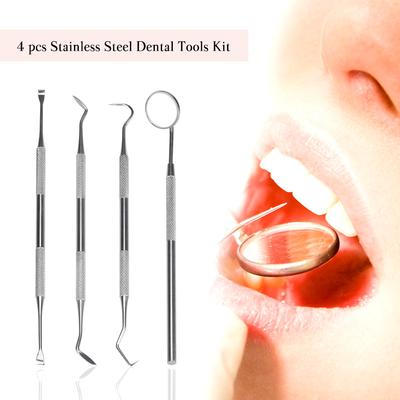
Friendly Fresh Finds Dental Hygiene Kit Plaque Remover And Tartar Scraper Set For Teeth Cleaning Dental Hygiene Kit Plaque Remover And Tartar Scraper Set For Teeth CleaningExperience a professionalgrade teeth cleaning at home with our 4Pcs Dental Hygiene Kit. Perfect for anyone who wants to maintain their oral health with precision, this set includes everything you need to remove tartar, plaque, and dental calculus....31,97 $*Shipping: 0,00 $Secure redirect to the provider



-
What are participle clauses?
Participle clauses are a type of clause that uses a present participle (-ing form) or a past participle (-ed form) to provide additional information about the subject of the main clause. They can be used to show simultaneous actions, cause and effect, or to provide descriptive details. For example, in the sentence "Feeling tired, she decided to go to bed," the participle clause "Feeling tired" provides additional information about the subject "she." **
-
What is a participle?
A participle is a form of a verb that can function as an adjective or be part of a verb phrase. There are two types of participles in English: the present participle, which ends in -ing (e.g. "walking"), and the past participle, which can end in -ed, -en, -d, -t, -n, or -ne (e.g. "broken"). Participles are used to modify nouns or pronouns, and they can also be used to form verb tenses such as the present perfect or past perfect. **
-
What is the difference between the past participle and the present participle?
The past participle is a verb form used to indicate a completed action or state that occurred in the past. It is often used with auxiliary verbs to form the perfect tenses (e.g., "has eaten," "had gone"). The present participle, on the other hand, is a verb form used to indicate an ongoing action or state in the present or future. It is formed by adding "-ing" to the base form of the verb and is used to create the progressive tenses (e.g., "is eating," "will be going"). **
-
How can the terms premature, simultaneous, and subsequent be explained in relation to past participle, present participle, and future participle?
The terms premature, simultaneous, and subsequent can be explained in relation to past participle, present participle, and future participle based on their timing in relation to the action of the verb. The past participle refers to an action that has already been completed, making it premature in relation to the present moment. The present participle refers to an action that is happening at the same time as something else, making it simultaneous. The future participle refers to an action that will happen at a later time, making it subsequent to the present moment. These terms help to clarify the timing of the action in relation to the verb. **

What is a nominalized participle?
A nominalized participle is a verb form that has been turned into a noun. This is done by adding a suffix to the participle form of the verb, which allows it to function as a noun in a sentence. Nominalized participles are commonly used in various languages to express actions or qualities in a more abstract or general way. **
What is a substantivized participle?
A substantivized participle is a verb form that has been turned into a noun by adding a definite article and declining it for case, gender, and number. In other words, it is a participle that has been transformed into a noun and can function as a subject, object, or complement in a sentence. This process allows the participle to take on the characteristics of a noun while still retaining some of its verbal qualities. **
Top-Angebote
Products related to Participle:
-
Uplift Essentials Advanced Hygiene & Freshness Maintenance Essentials whiteMaintain the peak performance of your automated pet care system with the Advanced Hygiene Maintenance Essentials. This specialized collection of refills is designed to keep your hightech pet furniture operating at maximum efficiency while ensuring...73,97 $*Shipping: 0,00 $Secure redirect to the provider
-
Uplifted Finds Phyto Dermal Dental Sanitization Hub Phyto Dermal Dental Sanitization HubOptimize your pets oral hygiene and metabolic relaxation with the PhytoDermal Dental Sanitization Hub, a professionalgrade mastication module engineered with biologicalabrasion logic. This highutility enrichment unit features a specialized pure...35,97 $*Shipping: 0,00 $Secure redirect to the provider
-
Inspire Curations PETCLEAR Pet Eye Cleaning Wipes For Tear Stain Removal & Daily Hygiene PETCLEAR Pet Eye Cleaning Wipes For Tear Stain Removal & Daily HygieneKeep your pets eyes fresh, clean, and comfortable with these pet eye wipes specially designed to help remove tear stains, dirt, and buildup around sensitive eye areas. With 200 premoistened wipes included, this convenient cleaning solution supports...58,00 $*Shipping: 0,00 $Secure redirect to the provider
-
Uplifted Finds Epidermal Sanitization Inventory (3 Pack Hub) Epidermal Sanitization Inventory (3 Pack Hub)Optimize your pets dermatological hygiene and ocular clarity with the Epidermal Sanitization Inventory, a professionalgrade maintenance system engineered with aqueouscleansing logic. This highutility 240unit logistics package features a specialized...111,97 $*Shipping: 0,00 $Secure redirect to the provider
-
'Will + participle 2?'
"Will + participle 2" is a construction used to form the future perfect tense in English. It is used to indicate an action that will be completed before a specific point in the future. This construction is formed by using the auxiliary verb "will" followed by the past participle of the main verb. For example, "By the time you arrive, I will have finished my homework." **
-
What are the Latin forms of the present participle, perfect passive participle, and future active participle?
The Latin present participle is formed by adding -ns, -ntis to the present stem of the verb. For example, the present participle of the verb "amo" (I love) is "amans, amantis" (loving). The perfect passive participle is formed by adding -us, -a, -um to the verb stem. For example, the perfect passive participle of the verb "amo" is "amatus, amata, amatum" (loved). The future active participle is formed by adding -urus, -ura, -urum to the verb stem. For example, the future active participle of the verb "amo" is "amaturus, amatura, amaturum" (about to love). **
-
What are participle clauses?
Participle clauses are a type of clause that uses a present participle (-ing form) or a past participle (-ed form) to provide additional information about the subject of the main clause. They can be used to show simultaneous actions, cause and effect, or to provide descriptive details. For example, in the sentence "Feeling tired, she decided to go to bed," the participle clause "Feeling tired" provides additional information about the subject "she." **
-
What is a participle?
A participle is a form of a verb that can function as an adjective or be part of a verb phrase. There are two types of participles in English: the present participle, which ends in -ing (e.g. "walking"), and the past participle, which can end in -ed, -en, -d, -t, -n, or -ne (e.g. "broken"). Participles are used to modify nouns or pronouns, and they can also be used to form verb tenses such as the present perfect or past perfect. **
Similar search terms for Participle
-
Uplift Essentials Soothing Pet Eye Cleaning Wipes Advanced Tear Stain Remover And Hygiene Tissues Soothing Pet Eye Cleaning Wipes Advanced Tear Stain Remover And Hygiene TissuesThe Gentle Solution for Bright, Healthy, and StainFree EyesRestore the natural beauty of your pet's face with a specialized grooming solution designed for the most sensitive areas. These pet eye cleaning wipes are the ultimate solution for owners of...41,97 $*Shipping: 0,00 $Secure redirect to the provider
-
Friendly Fresh Finds Dental Hygiene Kit Plaque Remover And Tartar Scraper Set For Teeth Cleaning Dental Hygiene Kit Plaque Remover And Tartar Scraper Set For Teeth CleaningExperience a professionalgrade teeth cleaning at home with our 4Pcs Dental Hygiene Kit. Perfect for anyone who wants to maintain their oral health with precision, this set includes everything you need to remove tartar, plaque, and dental calculus....31,97 $*Shipping: 0,00 $Secure redirect to the provider
-
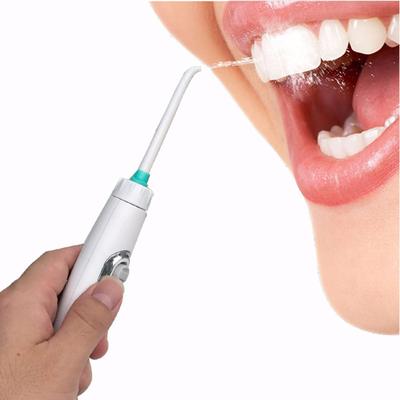
Friendly Fresh Finds Faucet Oral Irrigator Water Jet Effective Teeth Cleaning & Dental Flosser For Oral Hygiene Faucet Oral Irrigator Water Jet Effective Teeth Cleaning & Dental Flosser For Oral HygieneAchieve a cleaner, healthier smile with the Faucet Oral Irrigator Water Jet. Designed to provide powerful, easytouse oral care, this water flosser is perfect for anyone looking to improve their daily dental hygiene routine. Whether you struggle with...73,97 $*Shipping: 0,00 $Secure redirect to the provider
-
Uplift Essentials Advanced Hygiene & Freshness Maintenance Essentials yellowMaintain the peak performance of your automated pet care system with the Advanced Hygiene Maintenance Essentials. This specialized collection of refills is designed to keep your hightech pet furniture operating at maximum efficiency while ensuring...73,97 $*Shipping: 0,00 $Secure redirect to the provider
-
What is the difference between the past participle and the present participle?
The past participle is a verb form used to indicate a completed action or state that occurred in the past. It is often used with auxiliary verbs to form the perfect tenses (e.g., "has eaten," "had gone"). The present participle, on the other hand, is a verb form used to indicate an ongoing action or state in the present or future. It is formed by adding "-ing" to the base form of the verb and is used to create the progressive tenses (e.g., "is eating," "will be going"). **
-
How can the terms premature, simultaneous, and subsequent be explained in relation to past participle, present participle, and future participle?
The terms premature, simultaneous, and subsequent can be explained in relation to past participle, present participle, and future participle based on their timing in relation to the action of the verb. The past participle refers to an action that has already been completed, making it premature in relation to the present moment. The present participle refers to an action that is happening at the same time as something else, making it simultaneous. The future participle refers to an action that will happen at a later time, making it subsequent to the present moment. These terms help to clarify the timing of the action in relation to the verb. **
-
What is a nominalized participle?
A nominalized participle is a verb form that has been turned into a noun. This is done by adding a suffix to the participle form of the verb, which allows it to function as a noun in a sentence. Nominalized participles are commonly used in various languages to express actions or qualities in a more abstract or general way. **
-
What is a substantivized participle?
A substantivized participle is a verb form that has been turned into a noun by adding a definite article and declining it for case, gender, and number. In other words, it is a participle that has been transformed into a noun and can function as a subject, object, or complement in a sentence. This process allows the participle to take on the characteristics of a noun while still retaining some of its verbal qualities. **
* All prices are inclusive of VAT and, if applicable, plus shipping costs. The offer information is based on the details provided by the respective shop and is updated through automated processes. Real-time updates do not occur, so deviations can occur in individual cases. ** Note: Parts of this content were created by AI.