Buy reinraumreinigung.eu ?
We are moving the project
reinraumreinigung.eu .
Are you interested in purchasing the domain
reinraumreinigung.eu ?
domain@kv-gmbh.de · 0541-91531010
Buy reinraumreinigung.eu ?
Is cosh(x)sinh(x) = 1?
No, cosh(x)sinh(x) does not equal 1. The product of hyperbolic cosine (cosh) and hyperbolic sine (sinh) functions is equal to the hyperbolic cosine squared minus the hyperbolic sine squared, which is equal to 1. So, cosh(x)sinh(x) is not equal to 1, but rather equal to cosh^2(x) - sinh^2(x). **
Why is ln(x) for x < 1?
The natural logarithm function, ln(x), is defined for x < 1 because it is the inverse function of the exponential function, e^x. Since e^x is strictly increasing for all x, its inverse function ln(x) is only defined for x values where e^x is positive, which is when x < 1. This restriction ensures that ln(x) remains a well-defined function with a unique output for each input. **
Similar search terms for DeLonghi-Distinta-X-1
Top-Angebote
Products related to DeLonghi-Distinta-X-1:



-
What are the asymptotes of the functions f(x) = 6x/(x^2 + 13x + 1) and g(x) = 2x/(x^2 + x + 1)?
The function f(x) = 6x/(x^2 + 13x + 1) has two vertical asymptotes at x = -1 and x = -12, which are the roots of the denominator. The function g(x) = 2x/(x^2 + x + 1) has no real roots, so it has no vertical asymptotes. However, it does have a slant asymptote at y = 0, which can be found by dividing the numerator by the denominator using long division or synthetic division. **
-
What is the result of 1 x 1?
The result of 1 x 1 is 1. When you multiply 1 by 1, the product is 1. This is because any number multiplied by 1 is equal to the original number. Therefore, 1 multiplied by 1 equals 1. **
-
Is x^2 + x + 1 a double root at x = 0?
No, x^2 + x + 1 is not a double root at x = 0. A double root occurs when a polynomial has a repeated root, meaning the same value of x satisfies the equation twice. In this case, x^2 + x + 1 does not have x = 0 as a root at all, let alone a double root. **
-
Why is ln(x) = 1, ln(x) = pi, ln(x) = i with x > 0?
The natural logarithm function, ln(x), is the inverse of the exponential function, e^x. When ln(x) = 1, it means that e^1 = x, so x = e. When ln(x) = pi, it means that e^pi = x. And when ln(x) = i, it means that e^i = x. In all cases, x is a positive real number because e raised to any real number or imaginary number is always positive. **


What is the equation for 1 + 1 = x, when x has the value x1?
The equation for 1 + 1 = x, when x has the value x1, is 1 + 1 = x1. This equation simply states that when you add 1 and 1 together, the result is x1. It is a straightforward mathematical expression that shows the relationship between the numbers 1, 1, and x1. **
What is the equation for 1 + 1 = x, if x has the value x1?
The equation for 1 + 1 = x, if x has the value x1, would be 1 + 1 = x1. This equation states that the sum of 1 and 1 is equal to the value of x1. In this case, x1 is a specific value that is being assigned to the variable x in the equation. **
Top-Angebote
Products related to DeLonghi-Distinta-X-1:
-
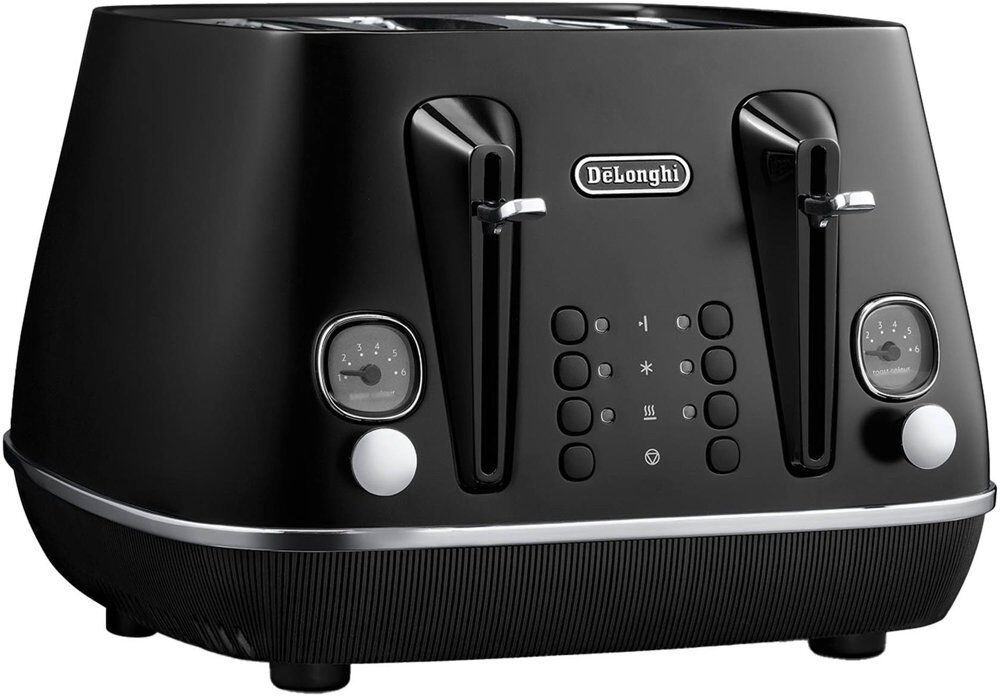
DeLonghi Distinta X 1.7L Kettle & 4 Slice Toaster Stainless Steel Black 1.7LElevate your kitchen with the Distinta X 1.7L Kettle & 4-Slice Toaster. Boil the perfect amount with a handy water level indicator, and enjoy golden toast with 6 browning levels. With 4-slot capacity, hi-rise lift, and removable crumb tray, it’s style, convenience, and performance for every household. De'Longhi Colour: Black315,99 £*Shipping: 0,00 £Secure redirect to the provider
-
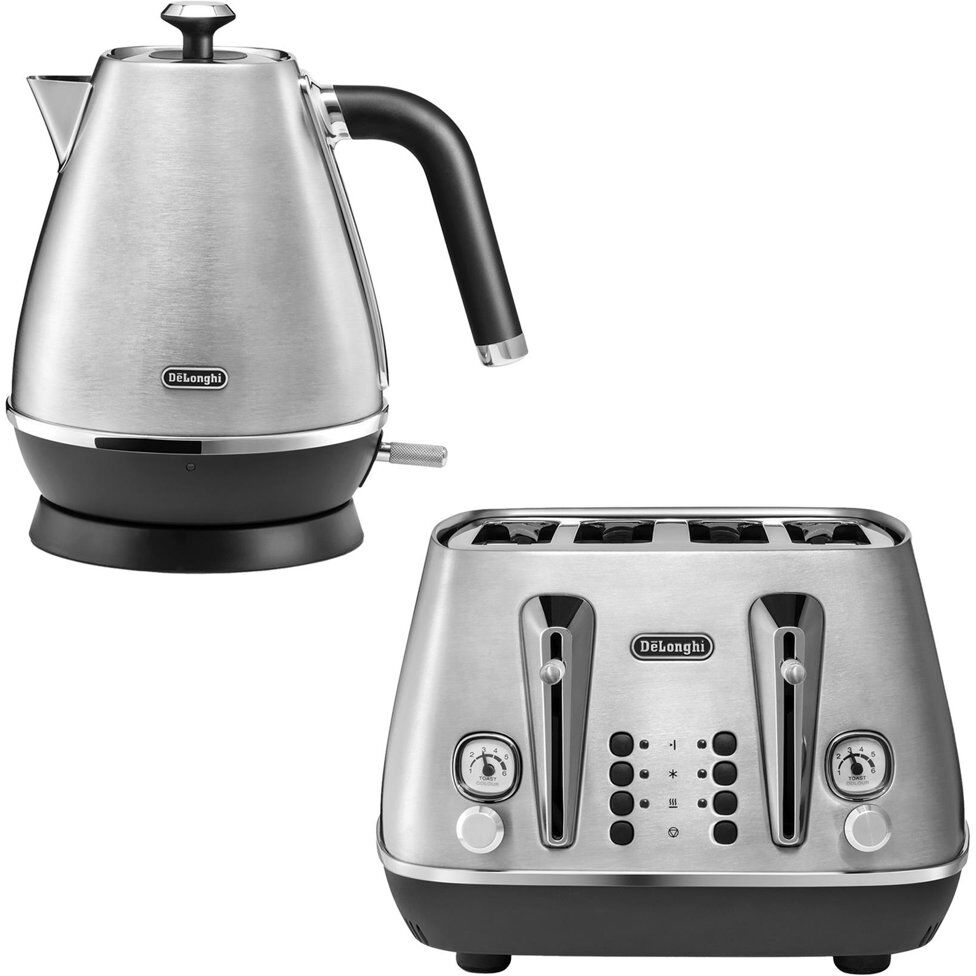
DeLonghi Distinta X 1.7L Kettle & 4 Slice Toaster Stainless Steel Stainless Steel 1.7LElevate your kitchen with the Distinta X 1.7L Kettle & 4-Slice Toaster. Boil the perfect amount with a handy water level indicator, and enjoy golden toast with 6 browning levels. With 4-slot capacity, hi-rise lift, and removable crumb tray, it’s style, convenience, and performance for every household. De'Longhi Colour: Stainless Steel319,99 £*Shipping: 0,00 £Secure redirect to the provider
-
Is cosh(x)sinh(x) = 1?
No, cosh(x)sinh(x) does not equal 1. The product of hyperbolic cosine (cosh) and hyperbolic sine (sinh) functions is equal to the hyperbolic cosine squared minus the hyperbolic sine squared, which is equal to 1. So, cosh(x)sinh(x) is not equal to 1, but rather equal to cosh^2(x) - sinh^2(x). **
-
Why is ln(x) for x < 1?
The natural logarithm function, ln(x), is defined for x < 1 because it is the inverse function of the exponential function, e^x. Since e^x is strictly increasing for all x, its inverse function ln(x) is only defined for x values where e^x is positive, which is when x < 1. This restriction ensures that ln(x) remains a well-defined function with a unique output for each input. **
-
What are the asymptotes of the functions f(x) = 6x/(x^2 + 13x + 1) and g(x) = 2x/(x^2 + x + 1)?
The function f(x) = 6x/(x^2 + 13x + 1) has two vertical asymptotes at x = -1 and x = -12, which are the roots of the denominator. The function g(x) = 2x/(x^2 + x + 1) has no real roots, so it has no vertical asymptotes. However, it does have a slant asymptote at y = 0, which can be found by dividing the numerator by the denominator using long division or synthetic division. **
-
What is the result of 1 x 1?
The result of 1 x 1 is 1. When you multiply 1 by 1, the product is 1. This is because any number multiplied by 1 is equal to the original number. Therefore, 1 multiplied by 1 equals 1. **
Similar search terms for DeLonghi-Distinta-X-1
-
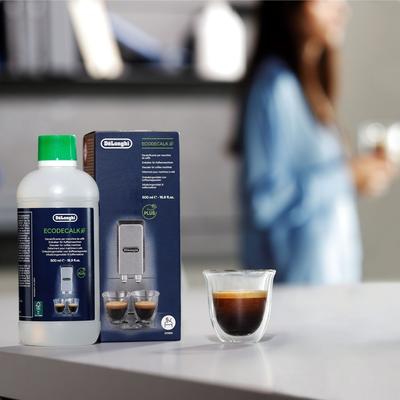
DeLonghi Care KitGood maintenance is the secret ingredient to consistently great coffee. The De'Longhi Coffee Care Kit comes with everything you need to keep your espresso machine in peak condition so your brews taste smooth, balanced, and exactly how they're meant to.39,95 $*Shipping: 0,00 $Secure redirect to the provider
-
Is x^2 + x + 1 a double root at x = 0?
No, x^2 + x + 1 is not a double root at x = 0. A double root occurs when a polynomial has a repeated root, meaning the same value of x satisfies the equation twice. In this case, x^2 + x + 1 does not have x = 0 as a root at all, let alone a double root. **
-
Why is ln(x) = 1, ln(x) = pi, ln(x) = i with x > 0?
The natural logarithm function, ln(x), is the inverse of the exponential function, e^x. When ln(x) = 1, it means that e^1 = x, so x = e. When ln(x) = pi, it means that e^pi = x. And when ln(x) = i, it means that e^i = x. In all cases, x is a positive real number because e raised to any real number or imaginary number is always positive. **
-
What is the equation for 1 + 1 = x, when x has the value x1?
The equation for 1 + 1 = x, when x has the value x1, is 1 + 1 = x1. This equation simply states that when you add 1 and 1 together, the result is x1. It is a straightforward mathematical expression that shows the relationship between the numbers 1, 1, and x1. **
-
What is the equation for 1 + 1 = x, if x has the value x1?
The equation for 1 + 1 = x, if x has the value x1, would be 1 + 1 = x1. This equation states that the sum of 1 and 1 is equal to the value of x1. In this case, x1 is a specific value that is being assigned to the variable x in the equation. **
* All prices are inclusive of VAT and, if applicable, plus shipping costs. The offer information is based on the details provided by the respective shop and is updated through automated processes. Real-time updates do not occur, so deviations can occur in individual cases. ** Note: Parts of this content were created by AI.